Now Reading: On Brendan Amadi’s “Echoes of a Mortal Dream”
-
01
On Brendan Amadi’s “Echoes of a Mortal Dream”

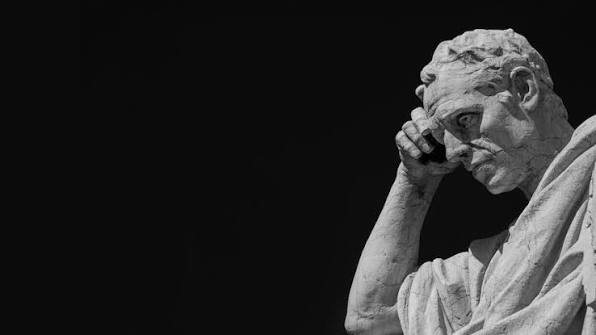
Written during the 21 days of writing challenge of the WSA-N, this poem of Brendan Chinonso Amadi, I should say, belongs to that austere poetic lineage that stretches from the biblical book of Ecclesiastes through Omar Khayyam to T. S. Eliot: a lineage that gazes unflinchingly into the abyss of mortality and still crafts from it a haunting music of reflection. The poem reads as both memento mori (Latin: remember you will die) and existential diagnosis: it anatomizes the human condition with surgical precision, exposing the illusionary scaffolding upon which life’s meanings are often built.
The opening stanza, “In the fevered bloom of flesh, / We are summoned— / By longing, by lust, by the illusion of joy.” immediately situates the reader within a phenomenology of embodiment. The “fevered bloom” evokes both vitality and disease, pleasure and decay as a duality that threads through the entire poem. The diction here is brilliant: the triad of “longing, lust, illusion” moves from appetite to delusion, suggesting that desire itself is not merely the fuel of life but also the architect of our eventual despair. The body, as both gift and prison, becomes the stage on which the tragicomedy of existence unfolds.
The middle movement of the poem, “The path from birth to dust / Is paved not with wisdom, / But with fleeting pleasures / And the slow erosion of grace” transforms what might have been moral lamentation into a stoic observation. The syntax slows down, mirroring the erosion it describes. Here, Amadi rejects the romantic myth of a life culminating in enlightenment; instead, he posits a grim entropy, a slow fading rather than a grand revelation. The contrast between “pleasures” and “erosion of grace” captures the human paradox: our joy is transient, our decline inevitable. The third stanza performs a kind of existential choreography: “Downward we drift— / Cradled in dreams, / Buoyant in youth’s golden lie, / Bent by labor’s weight in manhood, / Fractured by age’s brittle hand.” The progression here reflects the stages of life with painful exactitude. Each line contracts in vitality, as though the poem itself ages as it speaks. There’s a rhythmic fatigue that sets in, echoing the “drift” toward dissolution.
Then, the final philosophical incision: “Is this not the cruel jest of being? / A spark mistaken for flame, / A journey mistaken for purpose, / A life mistaken for meaning— / Its error unveiled / In the aching clarity of its end.” This is where the narrative voice achieves its most devastating lucidity. The repetition of “mistaken for” exposes human consciousness as a perpetual act of misreading life as a grand cognitive illusion. The poem’s climax is not emotional but epistemic: ending with recognition that all the while, what we called meaning was a mirage sustained by our refusal to see the void.
I only wished that there was one more visceral image between “Fractured by age’s brittle hand” and “Pierced by illness”. Perhaps something sensory that makes aging felt; something like a fading scent, a trembling memory, or the soft collapse of the body’s former certainty.
Other than that, it’s bravado all the way!
Related Posts



Stay Informed With the Latest & Most Important News
Previous Post
Next Post


Advertisement