Now Reading: BLURRED By Blessing Peter Titus
-
01
BLURRED By Blessing Peter Titus


The other day, I was talking to Uwam about how very different growing up and life would likely be for our son; how he may not experience the opportunity of interacting with children and people from a different religious background than his. You see, I grew up in the capital city of Taraba State—Jalingo. Back then, I lived in a compound with people from different parts of Nigeria. Our neighbourhood was a good mix of Christians, Muslims and traditionalists—although most of the traditionalists later became Christians. Back then, wells and boreholes weren’t common sites in homes and the state waterboard was as unpredictable as the sleeping patterns of a newborn; hence, the stream was the go-to for washing clothes and plates and fetching water for house use.
We (the children) often met at the stream, we went to the same schools, and played together in the evenings while our mothers prepared meals, and our fathers had conversations about work and the government. We took turns, going to each other’s houses and sharing in the meals served in our various homes on large, wide trays to accommodate everyone present.
I learnt early that my way of worship wasn’t the only option, I learnt to respect other people’s culture and beliefs even when they didn’t make sense to me. Sallah, whether karami or babba were interesting times because Baba’s Alhaji friends and our neighbourhood Muslims would share their meals with us. Most times, we didn’t cook on Sallah day because the food was often surplus, coming from right, left, and centre. The same was obtainable at Christmas time as we reciprocated, taking food from house to house. Life was good; we loved each other.
Changes began creeping in sometime in 2001, although the crisis (between Muslims and Christians) happened in Jos, Plateau State, the after-effects started becoming evident in Taraba too. Gradually, areas began to get segregated along religious lines. Christians in the area where I grew up, Kasuwan Yelwa, started selling off their properties and moving to areas like Mile Six, Magami and Mayo-Gwoi, while Muslims in the latter areas started moving towards Kasuwan Yelwa, Sabon Gari, and Hanyan Sarki.
When I got married and moved to Jos, I vividly remember telling Uwam that it was the first time in my life that I’d spend up to 4 months at a stretch without hearing Kiran Sallah. It was also the first time that Sallah was celebrated, and there was no evidence of Sallah where I lived. We had a conversation then, and I tried to understand why the Jos situation was different. Back home in Jalingo, although we no longer lived in Kasuwan Yelwa, Baba’s Alhaji friends still brought us naman Sallah, and our friends and colleagues (my siblings and I) still brought us abincin Sallah.
Uwam’s response left me perturbed; he, too, had grown up in Gangare, in a mixed neighbourhood, but the 2001 crisis polarised Jos extremely. People had experienced firsthand how their neighbours turned on them just because they weren’t from the same religion, and thus, most areas became single areas (Christian or Muslim) with very few exceptions. It became a norm, so much so that “an fara” symbolised doom, and to avoid falling victim when “an fara”, most people stopped interacting or going to areas that were of a different religious extraction.
For instance, I remember being warned as a serving corps member on the Plateau back in 2018 not to be anywhere near Bauchi road, Kwanan Shagari, Gangare, Masallacin Juma’a or any Muslim-dominated area when a crisis breaks out because I’ll most likely be a casualty. The same warning was passed to the Muslims too, not to be around Polo, Gada Biyu, Rukuba Road, or Farin Gada in case of a crisis.
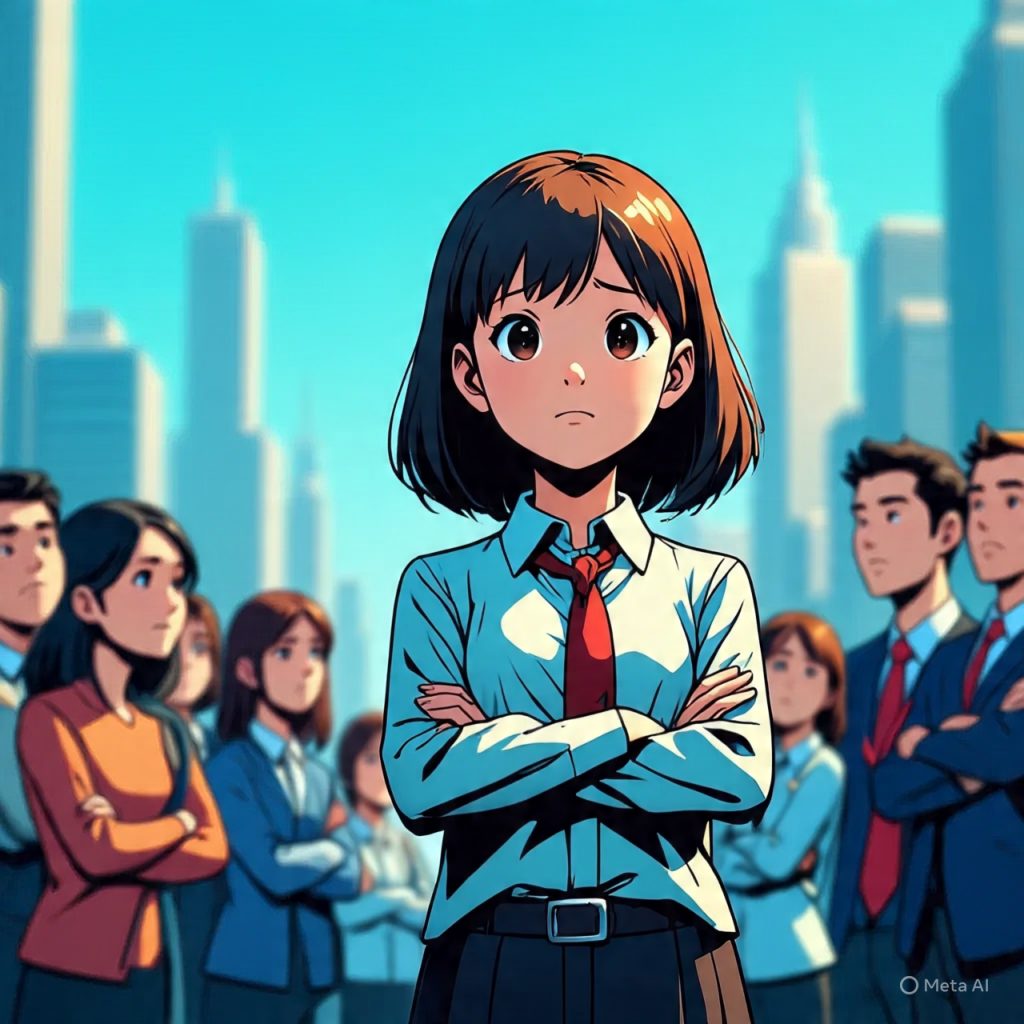
Now, our son is growing up in a “Christian area” and goes to a “Christian school.” His only interaction with Muslims so far has been a few times when his cousins, who are Muslim,s come visiting. I look at him and wonder how long it will take and if ever, he’ll have the opportunity to form his own opinions about Muslims outside of the negative narratives flying about on social media. I’m bothered because just like him, a significant number of Muslim children on the Plateau share a similar experience—growing up in a “Muslim area” and going to a “Muslim school” even when these schools are actually government or private schools.
I fear that he may grow up with a warped understanding of Muslims because no matter how I and Uwam may try to paint a picture of a time when we all lived in harmony and shared meals, how we had friends called Mohammed, Ahmed, Firdausi, Nafisa, Aisha, and Khadija it may sound foreign to him because the names he will most likely be hearing for the first sixteen years of his life will mostly be Emmanuel, John, and Blessing.
I fear that if conscious efforts are not made towards disabusing the minds of most people who have experienced and lost people in the many crises that have been cloaked in religion, we will have a new generation that feels their way is the only way. One question still keeps ringing though, how do you solve an issue when both sides see the problem, talk about it, but never take action towards solving it?
Related Posts

Stay Informed With the Latest & Most Important News
Previous Post
Next Post


Advertisement